


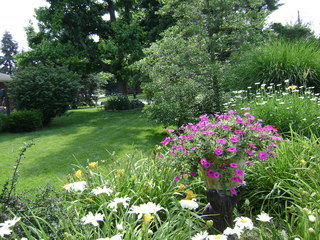


Weed Control: The "Triangle Approach"
Weed Control: The "Triangle Approach"
Have you ever determined that you're going to clean the basement, garage or barn and just become frozen in place because you can't determine where you should start on the massive job? Did you ever just say to yourself "forget it!" and go do something else instead? Well, the same thing happens when you decide to face down that weedy mess that you hesitate to call a Lawn. You know that it will take several different weedkillers, but you don't know which ones and in what order, or when they should be repeated to finish the job well.
Bestlawn Bermuda Guide
Bestlawn Bermuda Guide
PREFACE
Maintaining a Bermuda lawn is a very simple process that doesn’t require a lot of work to have a nice thick lawn. Bermuda grows very fast and aggressively during hot weather and will fill in a lot of bare spots if maintained correctly. The most labor-intensive part of caring for Bermuda is mowing in the heat of Summer. Bermuda also needs a regular supply of food to look its best.
Lawn Maintenance Schedule
Maintenance Schedule For Cool Season Lawns
Products that are mentioned and pictured below are only examples, not recommendations. There are similar products available by other brand names that you might prefer.
Mid-Late March
1. March is a great time to clean up the yard and begin the year’s maintenance regimen. The first thing to do is rake. Using a leaf rake might be best so as not to damage the soil's fragile condition at this time. The soil is likely still very moist, so rake lightly to stand the grass blades, unbind matting, and also clear away debris.
Benefits of Using Compost
Originally published on Earth911.com - Permission granted.
As more and more compost is produced and utilized and as the body of end-use related research grows, the benefits of using compost have become more evident and measurable. Because of its many attributes, compost is extremely versatile and beneficial in many applications. Compost has the unique ability to improve the properties of soils and growing media physically (structurally), chemically (nutritionally), and biologically. Although many equate the benefit of compost use to lush green growth, caused by the plant-available nitrogen, the real benefits of using compost are long-term and related to its content of living-organic matter.
Late Fall Lawn Care
For Cool Season Lawns
Mowing the lawn for winter
You may have read some recommendations to mow the grass shorter before winter. If you subscribe to that school of thought, then be sure to maintain the rule of thumb of not removing more than one third of the grass blade at a time.
I don’t personally believe it is necessary to mow shorter for winter and advise against it. The reason is preparation for that all-important last fertilizer application of the year. You know you don’t have to mow the lawn anymore when the effort does not return results. That is, of course, provided you maintained the same mowing height up to now and didn’t adjust the mower to a different setting.
Page 1 of 2